If you’re a blogger, you’ve probably wondered what the best length is for your blog posts. After all, you want your posts to be engaging and informative, but you don’t want to bore your readers with super-long articles. So, what is the best length for a blog post?
How long should a blog post be?
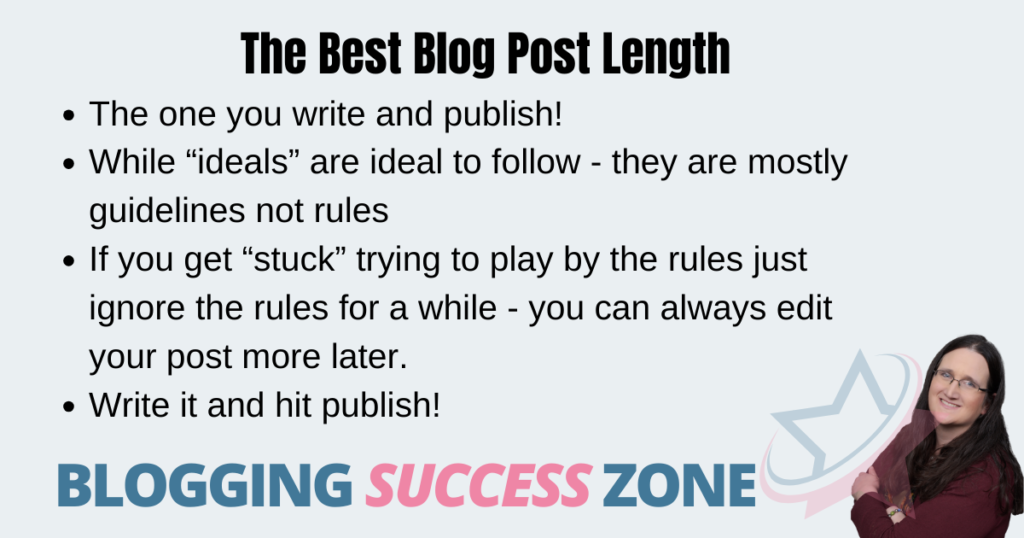
According to various sources, the ideal length for a blog post can vary depending on the purpose of the post. Short-form content should be around 300-600 words, while long-form content should be between 1,500-2,500 words. However, 2,100-2,400 words are considered better for SEO and more sharable for your readers.
While these numbers can be a helpful guideline, it’s important to remember that the quality of your content is more important than the length. Your goal should be to provide valuable information to your readers in a clear and concise manner.
The truth is, there is no one-size-fits-all answer to this question. The length of your blog post should depend on several factors, including your target audience, the topic you’re covering, your audience, and your goals for the post.
While some bloggers swear by long-form content, others believe that shorter posts are the way to go. So, what’s the best length for a blog post? Let’s take a closer look at the evidence and explore the pros and cons of different post lengths.
Why Length Matters
When it comes to blogging, the length of your post can have a big impact on its success. While there is no one-size-fits-all answer to the question of how long a blog post should be, there are some important factors to consider when deciding on the ideal length for your content.
Provide Value to Your Readers
First and foremost, you want to make sure your blog post is long enough to provide value to your readers. If your post is too short, it may not be able to fully explore the topic at hand, leaving your readers wanting more. On the other hand, if your post is too long, it may become overwhelming or difficult to read, causing readers to lose interest.
SEO Optimization
Another important factor to consider is search engine optimization (SEO). According to HubSpot data, the ideal blog post length for
However, it’s important to note that length isn’t the only factor that matters when it comes to
Social Media Sharability
In addition to
Summary of Why Length Matters
Ultimately, the ideal length for your blog post will depend on a variety of factors, including your audience, the topic you’re writing about, and your goals for the post. By considering these factors and experimenting with different lengths, you can find the sweet spot that works best for your blog and your readers.
Factors that Affect Blog Post Length
When it comes to blog post length, there is no one-size-fits-all answer. The length of a blog post depends on several factors, including:
Topic
The topic of your blog post plays a significant role in determining its length. If the topic is complex and requires in-depth analysis, you may need to write a longer post to cover all the necessary information. On the other hand, if the topic is straightforward and can be explained in a few paragraphs, a shorter post may be sufficient.
Audience
Your audience also plays a crucial role in determining the length of your blog post. If your audience is made up of busy professionals who don’t have a lot of time to read, shorter posts may be more effective. However, if your audience is made up of avid readers who are interested in every detail, longer posts may be more appropriate.
Purpose
The purpose of your blog post is another important factor to consider. If your goal is to provide a quick update or share a brief opinion, a shorter post may be more appropriate. However, if your goal is to provide an in-depth analysis or educate your audience on a complex topic, a longer post may be necessary.
Format
The format of your blog post can also impact its length. For example, if you’re writing a listicle or a how-to post, you may need to include more information to ensure that your readers have a complete understanding of the topic. On the other hand, if you’re writing a personal story or a news update, a shorter post may be more effective.
SEO
Finally, search engine optimization (SEO) can also impact the length of your blog post. According to HubSpot data, the ideal blog post length for
If you aren’t yet ready to focus on

This is a great ai writer that was specifically created for bloggers. Chose between writing a post It can create a blog post outline first. You can then edit the outline, move and change to your liking. Then it will write a blog post for you. You can modify the post to sound and feel like you but it is so much faster than starting with a blank page. It also has great chat options.
Ideal Blog Post Lengths for Different Goals
Increasing Traffic
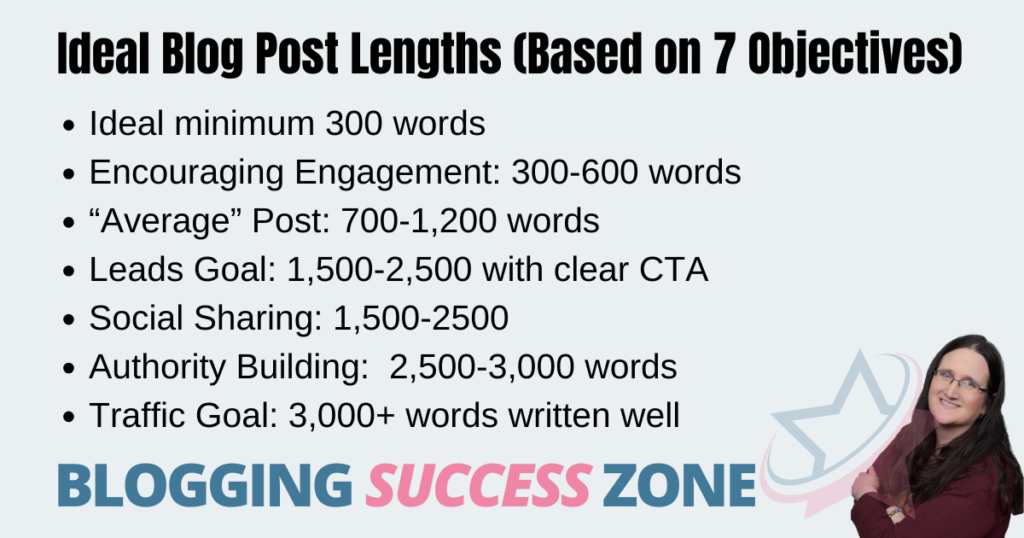
If your goal is to increase traffic to your blog, longer blog posts tend to perform better. According to a study by SEMrush, blog posts with 3,000+ words generate the most organic traffic. However, it’s important to note that quality content is still key. Simply adding more words to your post won’t necessarily increase traffic if the content isn’t engaging and valuable.
Generating Leads
When it comes to generating leads, blog posts that are around 1,500 to 2,500 words tend to perform best. This length allows you to provide in-depth information that can help establish your authority and expertise in your field. Additionally, including a clear call-to-action (CTA) at the end of your post can help encourage readers to take the next step and become a lead.
Building Authority
If your goal is to establish yourself or your brand as an authority in your field, longer blog posts can help you achieve that. Aim for posts that are around 2,500 to 3,000 words. This length allows you to provide comprehensive information and demonstrate your expertise on a particular topic.
Encouraging Engagement
Shorter blog posts tend to be better for encouraging engagement. Posts that are around 300 to 600 words can be a great length for sparking discussion and encouraging readers to leave comments. These posts are also more likely to be shared on social media, which can help increase engagement.
Maximizing Shares
If your goal is to maximize social media shares, aim for blog posts that are around 1,500 to 2,500 words. Posts in this length range tend to perform well on social media because they provide enough information to be valuable, but are still short enough to be easily digestible and shareable. Overall, the ideal length for a blog post depends on your specific goals and audience. It’s important to consider factors such as readability, engagement, and value when determining the length of your posts. By experimenting with different lengths and analyzing your results, you can find the ideal length for your blog posts.
Tips for Writing Effective Blog Posts
If you want your blog posts to be effective, there are a few tips you should keep in mind. By following these tips, you can create content that engages your readers and helps you achieve your goals.
Focus on Quality
The most important aspect of any blog post is the quality of the content. Your readers want to learn something new, be entertained, or be inspired. To achieve this, you need to focus on creating high-quality content that meets their needs. Make sure your posts are well-researched, well-written, and provide value to your readers.
Use Formatting to Your Advantage
Formatting can make your blog posts easier to read and understand. Use headings, subheadings, and bullet points to break up your content into smaller, more digestible chunks. Use bold and italics to emphasize important points. Use images and videos to illustrate your points and add visual interest to your posts.
Incorporate Visuals
Visuals can help you communicate your message more effectively. Use images, videos, and infographics to illustrate your points and add visual interest to your posts. Visuals can also help break up long blocks of text, making your posts easier to read and understand.
Break Up Long Posts
Long blog posts can be intimidating to readers. Break up your content into smaller, more manageable chunks. Use headings, subheadings, and bullet points to break up your content into smaller, more digestible chunks. This will make your posts easier to read and understand and will keep your readers engaged.
Test and Experiment
Not every blog post will be a hit. Test different types of content, different formats, and different topics to see what resonates with your audience. Use analytics to track your results and adjust your strategy as needed. By testing and experimenting, you can create content that resonates with your readers and helps you achieve your goals.
Conclusion
When it comes to determining the best length for a blog post, there is no one-size-fits-all answer. However, based on the research and data available, it is clear that longer blog posts tend to perform better in terms of
According to HubSpot, the ideal blog post length for
While some experts may argue that shorter blog posts are better for online readers with short attention spans, the truth is that longer blog posts can actually be more effective in capturing and holding a reader’s attention. In fact, Medium found that blog posts that took seven minutes to read earned the most engagement and attention.
Ultimately, the length of your blog post should be determined by the content you are covering and the needs of your audience. Whether you choose to write a short and sweet post or a longer, more in-depth article, the key is to provide valuable, informative content that resonates with your readers.